Posts

Showing posts with the label battle

The Battle of the Prozor in 1943.

Image
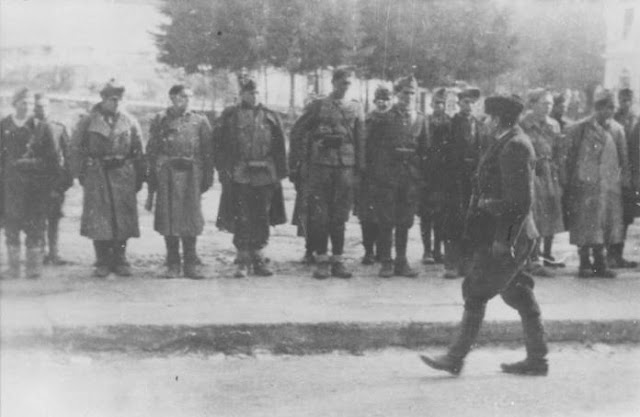
Column of Partizan in Prozor. The Battle of the Prozor was one of the significant battles of the Fourth Enemy Offensive. The battles for Prozor were fought on February 15 and 16, 1943, after which the Yugoslav partisans managed to briefly liberate the city from the Italians.   This attack by the People's Liberation Army of Yugoslavia on Prozor was remembered for Tito's order "The Prozor must fall tonight!" After the end of the Fourth and Fifth enemy offensives,  Prozor briefly fell into the hands of the partisans again in August 1943. The attack on Prozor took place as part of the planned operation of the Main Operational Group of the People's Liberation Army of Yugoslavia to penetrate the east and in a wider part of the operational unit known in historical fiction as the Battle of the Neretva or the Fourth Enemy Offensive.  General Pekić, Fraković, Colonel Boban, next to the armored car of the Black Legion, Prozora area, March 1943. Conflicting parties  ...

Daily report from the Yugoslav battlefield for 19 Januar , 1941 – 45

Image
King Peter II in conversation with Ivo Šubašić,  1942. -           The Prime Minister of the Kingdom of Italy, Benito Mussolini, issued a decree regulating the relations between the military and civilian authorities in the annexed territory of Yugoslavia, which entrusts the defense of public order to the military authorities. Advisory council of the High Commissioner's office from the province of Ljubljana and Benito Mussolini -           The Communist Party of Yugoslavia and the General Staff of the National Liberation Movement for BiH sent a proclamation to the people on the occasion of the open betrayal of the Chetniks in eastern Bosnia: they explain in detail the goals and motives of the betrayal of the Chetnik leadership; call on the fighters of the Chetnik units to join the National Liberation Movement detachment and continue the liberation struggle together with the partisans; they ...

The 2nd Proletarian Shock Brigade

Image
  Soldiers of the Second Proletarian Brigade march through eastern Bosnia, July 1943. The Second Proletarian People's Liberation Strike Brigade, also the Second Serbian Brigade, was formed by order of the Supreme Staff of the People's Liberation Army and Partisan Detachments of Yugoslavia on March 1, 1942, in Čajniče, by fighters from the Užice, Čačak and Second Šumadija Partisan Detachments. On the day of its formation, it had four battalions with about 1,000 fighters.   The first commander of the brigade was Ratko Sofijanic, a national hero, political commissar Milinko Kusic, a national hero, and the party leader and deputy political commissar Spasenija Cana Babovic, a national hero.   Ratko Sofijanic commander of the 2nd Proletarian Brigade The Second Proletarian NOU Brigade covered about 24,000 kilometers on its war journey. About 15,000 fighters from all over Yugoslavia fought in its ranks. It destroyed about 62,000 enemy soldiers. She gave a large number of ...

Interesting facts and figures on the Balkans in June 1942

Image
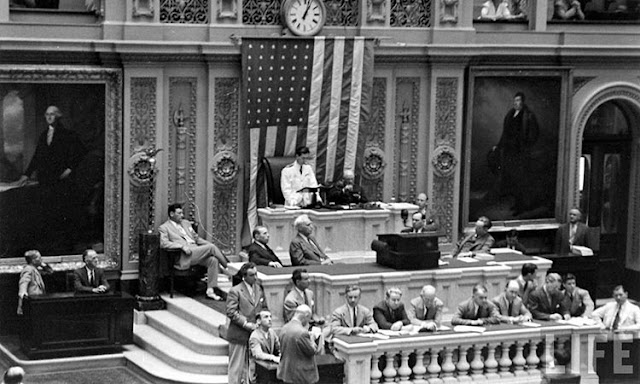
  King Peter II delivered a speech to Congress on June 25, 1942. Source Ministry of Foreign Affairs of the Republic of Serbia June 1 - Gen. shot in Bulgaria. Vladimir Zaimov for spying for the USSR. Monument Vladimir Zaimov, Pleven June 2 - September 11 - The BBC publishes lists of Nedićs and Ljotićs placed under the "letter Z" ("intimidate"), some of whom were killed by Chetnik troikas. The black troikas were three-member Chetnik formations for the liquidation of political opponents by slaughter. Although they were founded to liquidate the occupier's associates, many communists, fighters, and sympathizers of the resistance movement and members of their families came under attack. Chetnik trio slaughters. One of those present reads the verdict. June 7 - Metropolitan Hermogenes enthroned as Patriarch of the Croatian Orthodox Church. June 7 - Aris Velouchiotis declares the beginning of the struggle of the Greek National Liberation Army (ELAS), the military w...

"Tito's state" in the heart of occupied Europe - Republic of Bihać

Image
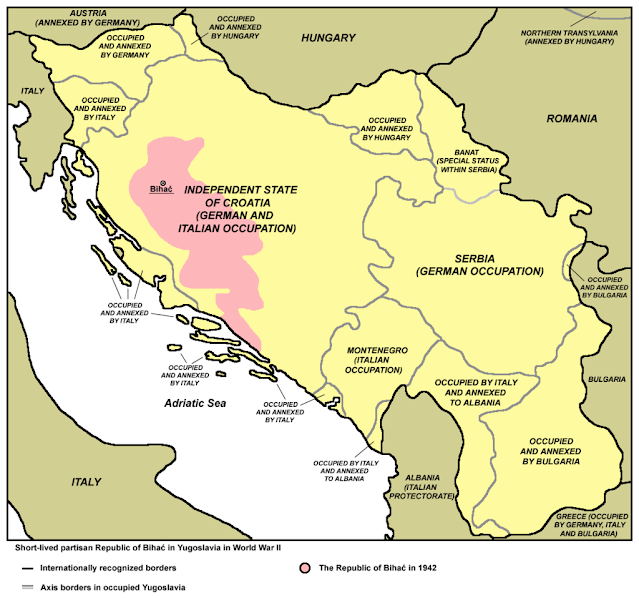
  The Republic of Bihać occupied Yugoslavia (pink). The borders are that of the World War II Axis partition of Yugoslavia, including the collaborationist puppet state, the Independent State of Croatia. The Bihać Republic was a vast partisan free territory created after the Bihać operation and the liberation of Bihać on November 4, 1942, by merging the liberated territories of the Bosnian Krajina and neighboring areas of Croatia.   From the beginning of November 1942 until the end of January 1943, Bihać was the center of the free Yugoslav territory, which stretched from the approaches to Karlovac and Zagreb, to the rivers Bosna and Neretva, covering about 50,000 km.   The development of the national liberation movement reached its highest level in this territory. In November 1942, the first divisions and corps of the People's Liberation Army of Yugoslavia were formed there, and the actions of the Supreme Headquarters succeeded.   The territory of the Repub...

Operation Bihać - Liberation of the city in occupied Europe in 1942

Image
  Comrade Tito inspected a battalion of the 3rd Krajina Brigade after the battles for Bihać, Bihać in November 1942. The Bihać operation is one of the greatest victories of the People's Liberation Army and Partisan Detachments of Yugoslavia in 1942. In it, eight brigades of the People's Liberation Army under the command of the Operational Headquarters for the Bosnian Krajina destroyed the Ustasha Home Guard garrison in Bihać and the surrounding areas and inflicted significant losses on the enemy. The battle for the city lasted from November 2 to 4, 1942, and continued with the ensuing march of the People's Liberation Army units against the remnants of broken units and demoralized surrounding garrisons. The Ustasha 4th (Brigade) and parts of the 12th Home Guard Infantry Regiment were defeated. This was one of the greatest in a long series of victories of the People's Liberation Army over the forces of the NDH, which shook the NDH and greatly limited the scope of its inst...

Campaign of the Proletarian Brigades in the Bosnian Krajina

Image
  The offensive of proletarian and strike brigades in western Bosnia and the Bihać operation in 1942. The campaign of proletarian brigades to Western Bosnia was carried out in the period from the end of June to the middle of August 1942. On June 24, 1942, the majority of units of the People's Liberation Army of Yugoslavia (First and Second Proletarian, Third Sandzak, and Fourth Montenegrin Brigades) and the Supreme Headquarters of the National Liberation Army left Zelengora for western Bosnia. Along the way, battles were fought with the enemy (Konjic, Bugojno, Prozor, Livno, Kupres) and a newly liberated territory was created. At the end of July, the Fifth Montenegrin Brigade joined these forces with the Herzegovinian NOP Detachment, from which the Tenth Herzegovinian Brigade was formed. The campaign in Bosnian Krajina was not intended as a march, but to strike at the enemy, expand free territory in western Bosnia and create favorable conditions for further development of the upris...