Posts

Showing posts with the label the_air_force_and_navy

Navy of the Independent State of Croatia

Image
  Naval Ensign of the Independent State of Croatia 1941 (from 1944 Naval Jack). The Navy of the Independent State of Croatia was the navy of the Independent State of Croatia during its existence. Right from the start, it was limited by the provisions of the Treaties of Rome and the Italian occupation of Dalmatia and Kvarner. Most of the navy spent the first half of the war on the eastern battlefield as the Croatian Naval Complex - the Black Sea. A somewhat better situation arose after the capitulation of Italy in 1943. However, the presence of a much stronger Kriegsmarine on the Adriatic ruled out the need for a separate Croatian navy, and the British navy and partisans dealt it heavy blows. After frequent desertions, the Germans abolished it and took over a small fleet. After 1943, it was called the Croatian Navy. designation Navy of the Independent State of Croatia On April 18, 1941, a decision on the organization of the army and navy of the Croatian Home Guard was published in...

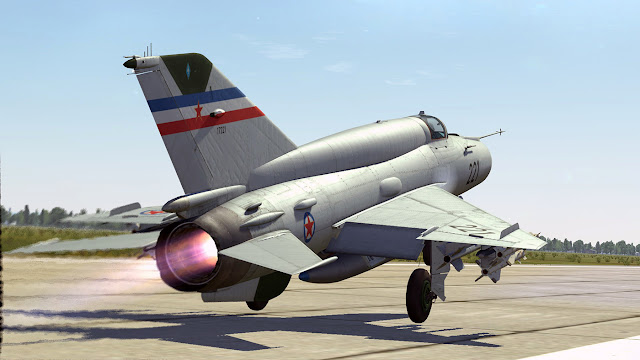
The second generation of MiG 21 in the service of the Yugoslav People's Army

Image
After the signing of the large procurement of arms in 1961 in which there were 40 fighter-interceptor MiG-21F-13 and which included a five-year procurement plan (1961-1965), Yugoslavia was expecting new procurement techniques from the Soviet Union. Consequently, permanent relations with Moscow were maintained in order to monitor the further development of the technique that was interesting to Yugoslavia. This PFM is loaded with two R-3S missiles on the underwing pylons. On the list of demands was the second generation of fighter-interceptor MiG-21 which is able to act in all weather conditions. First, the MiG-21PF variant attracted attention, but a newer version was quickly offered. After studying the variant MiG-21PF (internally designated as L-13) in June 1965, the newer MiG-21PFM was offered. The second five-year plan that was implemented in the period from 1966-1970. and called "Sutjeska", included the procurement of 36 MiG-21PFM fighter plane...

History of Yugoslav use of the fighter-interceptor MiG-21

Image
Yugoslavian AF Mig-21bis For more than 53 years, the MiG-21 a supersonic jet fighter and interceptor aircraft have been taking off from the Batajnica airport, and this type of aircraft is one of the most important and best-known combat aircraft in the history of military aviation. For decades, this aircraft was the basic aircraft in Yugoslavia and the only dedicated air defense aircraft. The development of combat aircraft in the 1950s was very dynamic and accelerated, so the military top of Yugoslavia at the end of that decade quickly realized that it was necessary to acquire a new modern fighter jet that would replace American F-86 Saber aircraft. In 1958, we began to think about moving to the fighter speed of two maha seriously and the Yugoslav Air Forces (JRV) Command began with analyzes of all possible solutions. Fighter MiG-21F-13 22540 at Pleso Airport. Great attention was drawn to the French Mirage-III (Mirage-III) fighter plane, then one of the most mod...

Yakovlev Yak-3 in the service of the National Liberation Struggle

Image
Classic Fighters 2015 - Yakovlev Yak-3 ZK-YYY Fighter plane of Soviet origin, Yakovlev Yak-3, represented the top of the development of a light fighter plane of high performance and great maneuverability, created by designer Alexandar S. Yakovlev, whose essential slogan was "simplicity doesn’t mean backwardness”. The plane’s first flight was performed in October 1943. and series production started in March 1944. Combat baptism Jak-3 had on 16th July 1944, and it was the best Soviet fighter plane in the W.W. II. To May 1945 there were manufactured 4.560 planes, and until the end of 1946, when production ceased, 4.848 fighters Yak-3.   Yugoslav Yak-3 Comparing with aircraft of western origin, Jak-3’s structure was obsolete. The fuselage of truss type construction of welded steel tubes, covered by plywood, the wing also wooden, except a metal boom. But, it didn’t influence to its characteristics. For a full horizontal 360° turn plane needed only 18 seconds, a...

Soviet fighter aircraft Yakovlev Yak-3 in Partisan and Yugoslav Air Forces

Image
Fighter plane of Soviet origin, Yakovlev Yak-3, represented the top of the development of a light fighter plane of high performance and great maneuverability, created by designer Alexandar S. Yakovlev, whose essential slogan was "simplicity doesn’t mean backwardness”. The plane’s first flight was performed in October 1943. and series production started in March 1944. Combat baptism Jak-3 had on 16th July 1944, and it was the best Soviet fighter plane in the W.W. II. In May 1945 there were manufactured 4.560 planes, and until the end of 1946, when production ceased, 4.848 fighters Yak-3. Yak-3 Yugoslav Air Force In addition to the British who helped in the creation of partisan aviation, help came from the Soviets. After the liberation of Belgrade, many former pilots exceeds aside Partizan, former pilots, engineers, mechanics and workers from the factory pre-war aircraft. So to create new units, fighters, and assault, as well as workshops for an overhaul of aircra...

Koni class frigates in the service of the Yugoslav Navy

Image
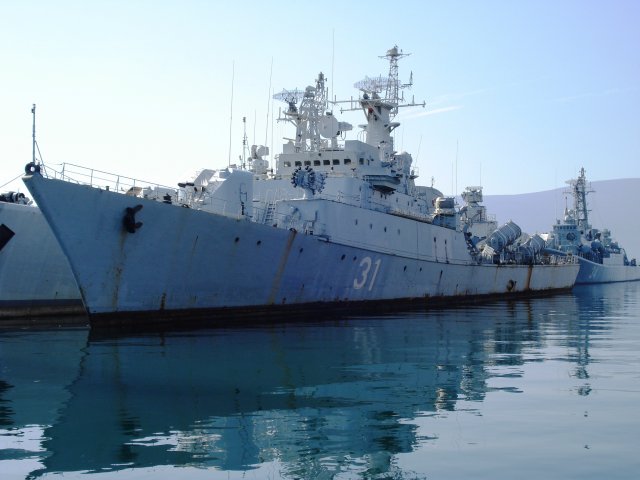
Rocket frigate class Koni is NATO's mark for the class of missile frigates built by the former USSR. They are also known as Soviet Project 1159. A total of 14 ships were built at the shipyard in Zelenodolska on the Black Sea between 1975 and 1988. It was first conceived as a replacement for the old class of the Riga frigate but was eventually chosen as an export product for the friendly navy. The Koni I subclass is intended for European waters, while the Koni II subclass is built for warmer water. Only a few are in the service today. The two frigates of this class were sold to Yugoslavia, and on the basis of them later, two new frigates of Yugoslav production were built, which were known as the great patrol boats of the Kotor class. The Romanian frigate class Tetal is very similar to the Koni class. The mothballed Yugoslav frigate Split or VPBR-31 Split near Tivat in the bay of Kotor Montenegro. VPBR-31 "Split" (ex-SSSR "Sokol"):...

Unfinished Yugoslav a multirole combat aircraft called "Novi Avion"

Image
Novi Avion The Novi Avion ( English: New Aeroplane) was a fourth generation multi-role combat aircraft programme that was to be built by Yugoslavia aircraft manufacturer SOKO. Since Yugoslavia had to only import military aircraft from military equipment, the New Airplane tried to make the country completely independent in that regard. The program of realization was considered and ultimately made in 1986. All works on this program were interrupted by the dissolution of the SFRY in the early 1990s. Novi Avion The Yugoslav aeronautical science and industry were getting ready for penetration of the sound barrier. Despite as yet an insuromountable economic crisis, the project of the multipurpose single-engine supersonic combat aircraft has been launched. Support of the project has already been given by the Federal Government as well, its Prime Minister Ante Markovic in particular, who said that he is „convinced that aeronautical development programs serve the developmen...